Description
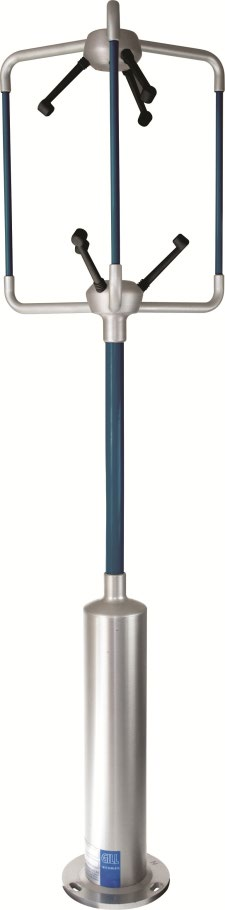
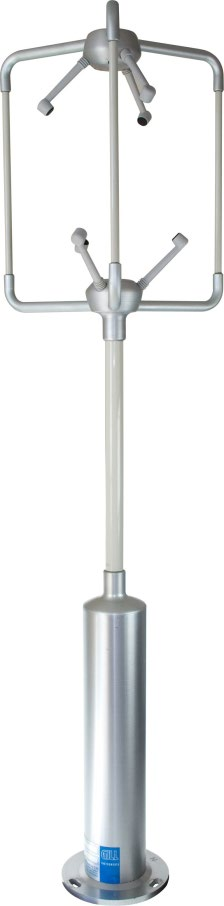
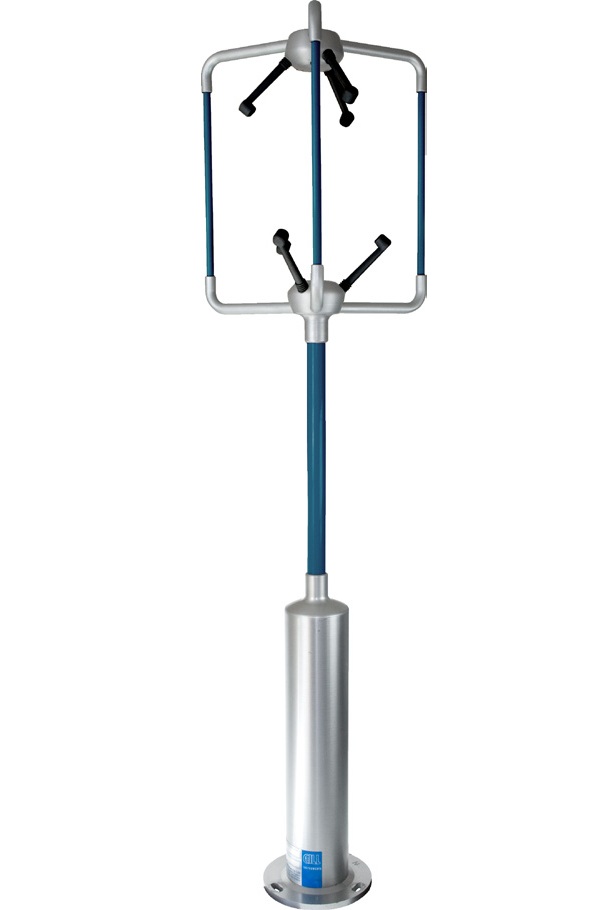
The R3 Anemometers are solid-state wind sensors, engineered specifically for high-speed scientific research and micrometeorological analysis. While standard industrial anemometers are limited to measuring horizontal wind on a flat plane, the R3 family utilises a specialised, 3-dimensional array of ultrasonic transducers. This configuration captures the complete three-dimensional wind vector, simultaneously resolving horizontal speed, wind direction, and vertical turbulence (updrafts and downdrafts). Operating at an ultra-fast 50 Hz or 100 Hz sampling rate, the R3 range can capture up to 100 complete wind data points every single second. This high frequency is critical for advanced micro-meteorology applications like Eddy Covariance flux measurements (tracking how greenhouse gases and heat move between the earth and the atmosphere) and structural wind tunnel testing. For researchers and engineers, this means the R3 doesn’t just tell you how hard the wind is blowing; it maps the microscopic, chaotic turbulence structures within the air column.
| R3-50 | R3-100 | R3A-100 | |
| Head Symmetry | Symmetrical | Symmetrical | Asymmetrical |
| Ultrasonic Output Rate | 0.4 to 50 Hz | 0.4 to 100 Hz | 0.4 to 100 Hz |
| Measurement Rate | 50 Hz, Full 3-Axis Measurement | 100 Hz, Full 3-Axis Measurement | 100 Hz, Full 3-Axis Measurement |
| Output Format | UVW or Polar (ASCII or Binary) | UVW or Polar (ASCII or Binary) | UVW or Polar (ASCII or Binary) |
| Wind Speed Range | 0-45 m/s | 0-45 m/s | 0-45 m/s |
| Wind Speed Resolution | 0-0.01 m/s | 0-0.01 m/s | 0-0.01 m/s |
| Wind Speed Accuracy | <1%RMS @12 m/s | <1%RMS @12 m/s | <1%RMS @12 m/s |
| Wind Speed Offset | <±0.01 ms | <±0.01 ms | <±0.01 ms |
| Wind Direction Range | 0-359° | 0-359° | 0-359° |
| Wind Direction Resolution | 1° | 1° | 1° |
| Wind Direction Accuracy | <±1°RMS | <±1°RMS | <±1°RMS |
| Speed of Sound Measurement Rate | 50 Hz | 100 Hz | 100 Hz |
| Speed of Sound Range | 300-370 ms | 300-370 ms | 300-370 ms |
| Speed of Sound Resolution | 0.01 ms | 0.01 ms | 0.01 ms |
| Speed of Sound Accuracy (For Wind Speeds <30ms) | <±0.5% | <±0.5% | <±0.5% |
| Power Supply | 9 to 30vDC | 9 to 30vDC | 9 to 30vDC |
| Operating Temperature | -40 to +60°C | -40 to +60°C | -40 to +60°C |
| Storage Temperature | -50 to +75°C | -50 to +75°C | -50 to +75°C |
| Serial Interface | RS422 Full Duplex | RS422 Full Duplex | RS422 Full Duplex |
| Baud Rates | 2400, 4800, 9600, 19200, 38400, 57600, 115200 |
2400, 4800, 9600, 19200, 38400, 57600, 115200 |
2400, 4800, 9600, 19200, 38400, 57600, 115200 |
| Format | 8 Data Bits, 1 Stop Bit, No Parity | 8 Data Bits, 1 Stop Bit, No Parity | 8 Data Bits, 1 Stop Bit, No Parity |
| Analogue Input Sampling Rate | 50Hz Synchronous to Wind | 100Hz Synchronous to Wind | 100Hz Synchronous to Wind |
| Analogue Input Input Voltage Range | – 5V to +5V | – 5V to +5V | – 5V to +5V |
| Analogue Input Accuracy | >0/05% of Full Scale | >0/05% of Full Scale | >0/05% of Full Scale |
| Analogue Input Resolution | 14 Bit | 14 Bit | 14 Bit |
| Analogue Input Common Mode Input Range | >±8V | >±8V | >±8V |
| Analogue Input Impedence | >1MΩ | >1MΩ | >1MΩ |
| PRT Resolution | 0.01°C | 0.01°C | 0.01°C |
| PRT Measurement Accuracy | <±0.1°C (-40 to +50°C) | <±0.1°C (-40 to +50°C) | <±0.1°C (-40 to +50°C) |
| Calibration | Custom Provided as Standard | Generic/Custom Option | Generic/Custom Option |
| Transport Case | Optional | Optional | Optional |
PCIA (Power and Communications Interface with Analogue Openings)
The PCIA acts as the central master junction box and power filter for the anemometer. Research sensors natively communicate via a high-speed, full-duplex digital RS422 data link to preserve signal integrity over long mast cable runs. The PCIA interfaces directly between this raw line and your processing hub.
-
Power Conditioning: It accepts generic DC power (9 to 30V DC) or standard AC mains power and conditions it into a clean, low-noise supply to prevent electrical interference from skewing the ultrasonic time-of-flight windows.
-
Signal Translation: It breaks out the high-speed digital stream into accessible standard RS232 or RS422 terminal connections for direct connection to an active DAQ computer or telemetry logger.
-
Analogue Conversion (Output): Critically, the PCIA contains high-resolution 14-bit Digital-to-Analogue Converters (DACs). It takes the incoming digital 3D wind vectors (U, V, W), Sonic Temperature, and Speed of Sound data streams from the sensor head and instantly renders them as up to 7 simultaneous analog output channels (typically ±2.5V, 0-5V, or 4-20mA). This is essential if you are tying the 3D sensor into legacy multi-channel analog data loggers.
SIU (Sensor Input Unit)
While the PCIA translates data leaving the sensor, the SIU is designed to pull third-party environmental data into the sensor’s unified data pipeline. In micro-meteorological setups, specifically Eddy Covariance flux installations, scientists must synchronise fast-response wind turbulence data with external analyzers.
-
Unified Time-Stamping: If you are co-locating a fast-response gas analyzer (such as a CO2 or H2O infrared probe) or a high-end net radiometer alongside the 3D anemometer, wiring them into the SIU allows the unit to ingest up to 6 differential analogue inputs (14 bit, ±5V).
-
Zero-Lag Pipeline: The SIU digitises these auxiliary inputs at an identical rate and interleaves them cleanly into the anemometer’s primary digital output string. This guarantees that your gas concentration measurements or thermal readings are perfectly time-stamped down to the millisecond alongside the exact wind vector that transported them, eliminating post-processing phase alignment alignment errors.