
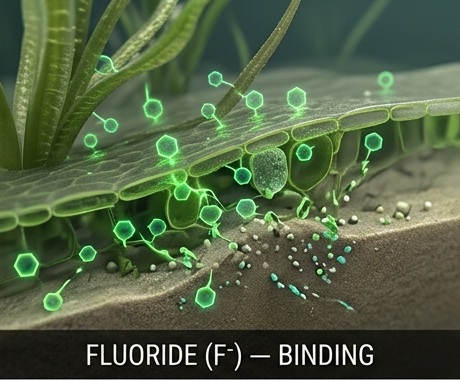
Fluoride (F-) is a naturally occurring ion derived from Fluorine, the thirteenth most abundant element in the Earth’s crust. Found in varying concentrations across all freshwater ecosystems, it typically exists in trace amounts within pristine rivers and lakes. However, when human industrial processes or unique geological conditions accelerate its release into local watersheds, Fluoride transitions from a trace element into a persistent and challenging pollutant.
Unlike nutrients that cycle rapidly through biological systems, Fluoride concentrations in water courses change primarily through mineral dissolution and industrial waste streams:
While controlled amounts of Fluoride are beneficial to human dental health, excessive concentrations are highly toxic to aquatic life. High Fluoride levels disrupt the skeletal development of fish, cause severe structural damage to invertebrates, and alter the cellular metabolism of aquatic plants.
Monitoring is essential because Fluoride pollution exhibits two distinct behavioural patterns over time:
Data-Driven Solutions to Restore River Systems
Because Fluoride does not naturally break down or evaporate from water, tracking its concentration is the only way to manage and mitigate its impact. Continuous monitoring gives environmental agencies the clear spatial data required to pinpoint exact industrial outfalls or agricultural zones responsible for the pollution.
With precise real-time data, authorities can implement effective, immediate solutions: mandating specialised industrial filtration systems (such as activated alumina or reverse osmosis treatment) at the source, tightening regulatory discharge permits, or altering water blending strategies at municipal facilities to safely dilute concentrations back to natural baseline levels.
To accurately detect both sudden industrial spills and long-term mineral build-up, water resource managers rely on precise, continuous monitoring. Aquaread’s Fluoride Ion Selective Electrodes (ISEs) provide a direct, reliable field testing method to measure real-time Fluoride (F-) concentrations without the delay of sending samples to a laboratory.
Aquaread’s modular, tool-free Fluoride ISE sensors integrate flawlessly into their range of multi-parameter Aquaprobes, pairing alongside essential water metrics like pH, conductivity, and temperature:
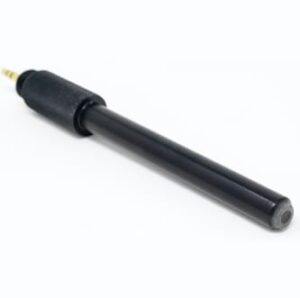
AP-2000 Fluoride Electrode with 2 Auto-Range scales 0-99.9 mg/L (ppm) or 100-999 mg/L (ppm). Accuracy ±10% of readings or 2ppm (whichever is greater). Minimum Level of Detection 0.05 ppm. The 2000-FLU is designed for use with the AP-2000 Aquaprobe sensor with pH probe. Readings may be affected by Hydroxide ions.
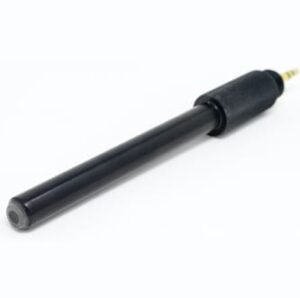
AP-5000 Fluoride Electrode with 2 Auto-Range scales 0-99.9 mg/L (ppm) or 100-999 mg/L (ppm). Accuracy ±10% of readings or 2ppm (whichever is greater). Minimum Level of Detection 0.05 ppm. The 5000-FLU is designed for use with the AP-5000 Aquaprobe sensor with pH probe. Readings may be affected by Hydroxide ions.
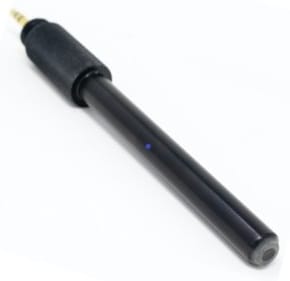
AP-7000 Fluoride Electrode with 2 Auto-Range scales 0-99.9 mg/L (ppm) or 100-999 mg/L (ppm). Accuracy ±10% of readings or 2ppm (whichever is greater). Minimum Level of Detection 0.05 ppm. The 7000-FLU is designed for use with the AP-7000, or AP-6000 Aquaprobe sensor with pH probe. Readings may be affected by Hydroxide ions.
Industrial and geological pollution rarely involves just one chemical parameter. Aquaread’s multi-port auxiliary configuration allows you to deploy several Ion Selective Electrodes simultaneously to get a complete geochemical snapshot.
By tracking Calcium (Ca2+} alongside Fluoride, you can analyze how water hardness influences the solubility and toxicity of Fluoride in the stream. Concurrently adding Chloride (Cl-) allows you to track overall industrial salinity spikes, while combining Nitrate (NO3-) and Ammonium (NH4) sensors lets you differentiate between industrial chemical discharges and agricultural fertilizer runoff. This powerful multi-electrode approach turns a single Aquaprobe into an all-in-one catchment diagnostic toolkit.
A real person will answer the phone and deal with your enquiry.
You can also click the button below and fill in our online enquiry form.
Need help with your products or have a question for us on our custom systems? Use the form below to send us a message and our experts will be in touch to help.