

Skip to content

omni instruments | sensors and data acquisition equipment

Omni Instruments Ltd

Sales & Technical Support

  • +44 (0) 1382 443000
  • info@omni.uk.com
Omni Instruments Ltd
  • Home
  • Custom Systems
  • Our Brands
  • System Hires
  • About
  • Contact
  • Home
  • Custom Systems
  • Our Brands
  • System Hires
  • About
  • Contact
Products
  • Data Loggers
  • Displacement
  • Display & Control
  • Flow Meters
  • Gas Detection
  • Gyros & Accelerometers
  • Level & Distance
  • Load Cells
  • Pressure Sensors
  • Radio & GSM Telemetry
  • Remote Monitoring
  • Serial Ethernet & ModBus
  • Solar & Wind Power
  • Subsea & Offshore
  • Temperature and Humidity
  • Test & Calibration
  • Torque Transducers
  • Vibration Monitoring
  • Voltage & Current
  • Water Quality
  • Weather Instruments
  • Accessories
  • Data Loggers
  • Displacement
  • Display & Control
  • Flow Meters
  • Gas Detection
  • Gyros & Accelerometers
  • Level & Distance
  • Load Cells
  • Pressure Sensors
  • Radio & GSM Telemetry
  • Remote Monitoring
  • Serial Ethernet & ModBus
  • Solar & Wind Power
  • Subsea & Offshore
  • Temperature and Humidity
  • Test & Calibration
  • Torque Transducers
  • Vibration Monitoring
  • Voltage & Current
  • Water Quality
  • Weather Instruments
  • Accessories
  • Home
  • Custom Systems
  • Our Brands
  • System Hires
  • About
  • Contact
  • Home
  • Custom Systems
  • Our Brands
  • System Hires
  • About
  • Contact
Need Help?
£0.00 0 Basket
Product
  • Data Loggers
  • Displacement
  • Display & Control
  • Flow Meters
  • Gas Detection
  • Gyros & Accelerometers
  • Level & Distance
  • Load Cells
  • Pressure Sensors
  • Radio & GSM Telemetry
  • Remote Monitoring
  • Serial Ethernet & ModBus
  • Solar & Wind Power
  • Subsea & Offshore
  • Temperature and Humidity
  • Test & Calibration
  • Torque Transducers
  • Vibration Monitoring
  • Voltage & Current
  • Water Quality
  • Weather Instruments
  • Accessories
  • Data Loggers
  • Displacement
  • Display & Control
  • Flow Meters
  • Gas Detection
  • Gyros & Accelerometers
  • Level & Distance
  • Load Cells
  • Pressure Sensors
  • Radio & GSM Telemetry
  • Remote Monitoring
  • Serial Ethernet & ModBus
  • Solar & Wind Power
  • Subsea & Offshore
  • Temperature and Humidity
  • Test & Calibration
  • Torque Transducers
  • Vibration Monitoring
  • Voltage & Current
  • Water Quality
  • Weather Instruments
  • Accessories
£0.00 0 Basket

Aquaread

Home / Our Brands / NKE Group / Aquaread / Ion Selective Electrodes / Ammonium and Ammonia Electrode

Ammonium and Ammonia Electrode

Understanding Ammonia and Ammonium Levels in Water Courses

Ammonia (NH3) and Ammonium (NH4+) represent two distinct chemical forms of the same basic Nitrogen compound found in freshwater ecosystems. Often referred to collectively as Total Ammonia Nitrogen (TAN), they exist in a dynamic equilibrium that is heavily dependent on the water’s temperature and pH. While Ammonium (NH4+) is a relatively harmless, ionised nutrient readily absorbed by aquatic plants, un-ionised Ammonia (NH3) is an extremely volatile gas that is highly toxic to fish and aquatic invertebrates, even at microscopic concentrations.

How Ammonia/Ammonium Levels Change: Natural vs. Anthropogenic Causes

The balance and concentration of Ammonia in rivers and inland water courses fluctuate constantly based on biological decay and direct chemical pollution:

  • Natural Processes: In pristine environments, Ammonia is introduced in low concentrations through the natural lifecycle of the river. It is a primary byproduct of the biological decomposition of organic matter, such as dead aquatic plants, fallen leaves, and fish waste. Soil bacteria naturally convert this waste into Ammonium, which is typically absorbed by vegetation or processed into Nitrates via Nitrification.
  • Industrial & Human Pollution: Hazardous, unnatural elevations of Ammonia are almost exclusively driven by human activity. Raw sewage discharges, failing municipal wastewater infrastructure, and septic system leaks dump massive quantities of organic Ammonia directly into rivers. Furthermore, agricultural run-off carrying livestock manure or synthetic Nitrogen fertilisers provides a heavy influx of nutrients, while industrial effluents from chemical manufacturing, plastics production, and food processing plants introduce concentrated chemical streams.

The Crucial Need for Monitoring: Rapid vs. Progressive Trajectories

Ammonia is a highly critical environmental indicator because it represents “fresh” pollution. High levels of un-ionised Ammonia damage fish gills, cause respiratory distress, destroy cellular membranes, and induce neurological toxicity.

Monitoring is essential because the chemical dynamic can shift violently along two very different timelines:

  • Rapid Changes: These are acute, flash pollution events. A sudden failure at a sewage treatment plant, an industrial chemical spill, or a torrential downpour washing livestock waste directly into a stream can cause Ammonia levels to spike exponentially within hours. Because the toxicity of this spike escalates rapidly if the water temperature or pH rises during the day, instant detection is required to prevent widespread fish kills.
  • Progressive Changes: These involve long-term, chronic elevations. Persistent, low-level leakage from urban infrastructure or continuous agricultural drainage can slowly elevate the baseline Ammonia levels across a watershed. This chronic exposure stresses aquatic species over months, weakening their immune systems, disrupting reproduction, and progressively degrading the ecosystem’s biodiversity.

Data-Driven Solutions to Restore River Systems

Because Ammonia is a highly volatile and immediate threat, tracking its concentration allows environmental teams to execute precise, rapid-response mitigation. Continuous real-time monitoring provides the clear spatial and temporal data required to trace a toxic plume directly back to a specific malfunctioning outfall, agricultural zone, or industrial facility.

With accurate data baselines, catchment managers can deploy effective solutions: triggering automated emergency shut-off valves at industrial outfalls, optimising aeration and treatment protocols at municipal sewage plants, enforcing stricter agricultural waste-containment regulations, or implementing riparian wetlands to naturally filter and oxidise Ammonium before it reaches the main river channel.

Advanced Water Quality Monitoring with Aquaprobes

To capture volatile, rapid chemical spikes and long-term biological nutrient shifts, water resource managers rely on continuous in-situ instrumentation. Aquaread’s Ammonium Ion Selective Electrodes (ISEs) measure the dissolved Ammonium (NH4+) ion directly in the field. When paired with the Aquaprobe’s integrated pH and temperature sensors, the system automatically calculates the exact concentration of highly toxic un-ionised ammonia (NH3) in real time.

Aquaread’s modular, tool-free Ammonium ISE sensors integrate seamlessly into their multi-parameter Aquaprobe range, transforming standard environmental surveys into advanced toxicological monitoring:

  • AP-2000: A compact, highly portable probe perfect for field technicians conducting rapid handheld spot-checks, emergency spill investigations, or stream profiling along riverbanks.
  • AP-5000: A versatile portable unit featuring four unrestricted auxiliary ports, allowing field teams to customize a vast array of simultaneous chemical tests during catchment surveys.
  • AP-6000 & AP-7000: Heavy-duty, robust units designed specifically for permanent or long-term unmanned remote deployments, capable of continuously logging critical data directly in the water column for weeks or months at a time.
2000-AMM

2000-AMM

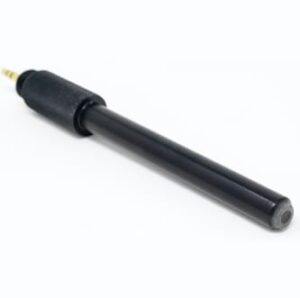
AP-2000 Ammonium Electrode with 2 Auto-Range scales 0-99.9 mg/L (ppm) or 100-8,999 mg/L (ppm). Accuracy ±10% of readings or 2ppm (whichever is greater). Probe will also monitor Ammonia when used in combination with pH and temperature readings on the AP-2000 Aquaprobe sensor
View Product
5000-AMM

5000-AMM

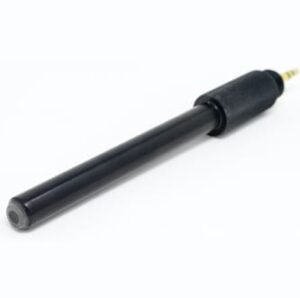
AP-5000 Ammonium Electrode with 2 Auto-Range scales 0-99.9 mg/L (ppm) or 100-8,999 mg/L (ppm). Accuracy ±10% of readings or 2ppm (whichever is greater). Probe will also monitor Ammonia when used in combination with pH and temperature readings on the AP-5000 Aquaprobe sensor
View Product
7000-AMM

7000-AMM

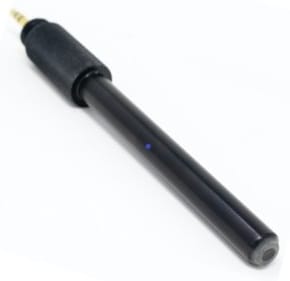
AP-7000 Ammonium Electrode with 2 Auto-Range scales 0-99.9 mg/L (ppm) or 100-8,999 mg/L (ppm). Accuracy ±10% of readings or 2ppm (whichever is greater). Probe will also monitor Ammonia when used in combination with pH and temperature readings on the AP-7000, or AP-6000, Aquaprobe sensor

View Product

Holistic Tracking: The Multi-Electrode Advantage

Nutrient overloading and sewage leaks are complex environmental problems that rarely involve a single compound. Aquaread’s multi-port auxiliary configuration allows you to deploy several Ion Selective Electrodes concurrently to get a comprehensive chemical diagnostic map of the river system.

By tracking Nitrate (NO3) alongside Ammonium, you can instantly determine the age and origin of Nitrogen pollution, revealing whether it stems from fresh sewage/fertiliser (high Ammonium) or older, oxidised agricultural runoff (high Nitrate). Concurrently adding a Chloride (Cl-) sensor allows you to trace urban wastewater plumes or industrial salinity signatures, while integrating Calcium (Ca2+) and Fluoride (F-) sensors lets you isolate agricultural influences from geological and industrial inputs. This multi-electrode approach turns a single Aquaprobe into an all-in-one catchment diagnostic toolkit.

CONTACT US

8:30am to 5pm Monday to Thursday
8:30am to 3pm on Friday.

  • +44 (0) 1382 443000
  • info@omni.uk.com

A real person will answer the phone and deal with your enquiry.
You can also click the button below and fill in our online enquiry form.

Technical Sales

links

  • About
  • Contact
  • Custom Systems
  • Privacy & Cookies
  • Terms & Conditions

omni instruments

Omni Instruments Ltd,
Unit 1, 14 Nobel Road,
Wester Gourdie Industrial Estate,
Dundee, DD2 4UH, UK

Sales & Support

  • +44 (0) 1382 443000
  • info@omni.uk.com

Payments

mastercard-color
visa-color
amex-color
Copyright Omni Instruments 2026 | Design. Build. Host.

        We are here to help

        Need help with your products or have a question for us on our custom systems? Use the form below to send us a message and our experts will be in touch to help.

        Call us on +44 (0)1382 443000