
Description
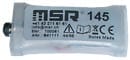
MSR145 Miniaturised universal data logger. Over 2 million measurement parameters. Lithium-polymer battery, rechargeable via USB connection. Unit comes complete with PC software for unit configuration and downloading.
B4 – Silicon Tube with 260mAh battery. IP67 Waterproof Protection.
FH/160 – Ext RH Sensor, 1.60m Cable. 0-100%RH Range
FH/160 – Ext RH Sensor, 1.60m Cable. 0-100%RH Range
FH/160 – Ext RH Sensor, 1.60m Cable. 0-100%RH Range
FH/160 – Ext RH Sensor, 1.60m Cable. 0-100%RH Range
FH/160 – Ext RH Sensor, 1.60m Cable. 0-100%RH Range
Suggested Applications
Environmental Chamber Gradient:
Stratification is common in sealed environments. Placing sensors in different locations can help you understand the best areas to use for different applications.
- Sensor 1 (The Geometric Center): Placed exactly in the middle of the chamber. This is your “Reference” point to compare against the chamber’s built-in display.
- Sensor 2 (Top Corner Rear): Humidity tends to be higher near the top if there is poor circulation, as warm air holds more moisture.
- Sensor 3 (Opening/Access Point): This is often the “worst-case” location near the door seal. Gasket leaks frequently cause humidity drops at this specific point.
- Sensor 4 (Near the Fan/Humidifier Intake): To see the “supply” humidity before it distributes.
- Sensor 5 (Opposite Corner of Sensor 2): To capture the horizontal diagonal variance.
HVAC / Crawlspace Performance Mapping:
If you have a home with a damp crawlspace or a large attic, this logger would be ideal for verifying if your vapor barrier or dehumidifier is actually working.
- The Setup: Place the logger in the center of the crawlspace. Snake the five probes toward the vents, the corners, and directly against the foundation wall.
- The Insight: You can see if moisture is “wicking” through the walls (high RH near the concrete) or if it’s coming from the air (high RH near the vents).