
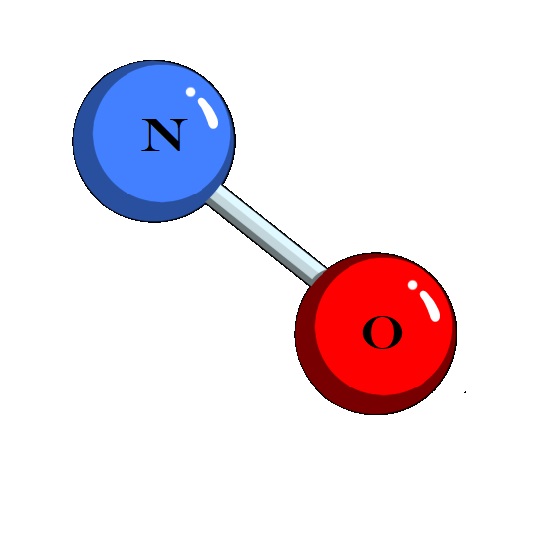
Description
Nitric Oxide (NO)
Introduction of Nitric Oxide
Nitrogen Monoxide (NO) is a chemical compound belonging to the family of Nitrogen Oxides, commonly referred to as NOx. NO, sometimes called Azotic Oxide or Nitric Oxide, takes the form of a gas under normal temperature and pressure conditions. It is also present in the body, in which it has biological properties. These include an important neurotransmitter in mammals.
Road traffic, combustion plants and certain industrial processes (glass, metal, cement manufacturing, etc.) are the main sources of nitrogen monoxide emission. This is because it is obtained by the oxidation of ammonia, or from the reaction between Nitrogen and Oxygen. Note that NO can also form naturally during thunderstorms or volcanic eruptions.
Use of Nitric Oxide
Nitric Oxide is used in several industries:
- Wood industry;
- Metallurgical;
- Agricultural sector;
- Chemical industry;
- Hospital sector.
NO is used, in particular, for the manufacture of explosives, high temperature welding activities and the production of standard mixtures for the control of air pollution and flue gases. It is also found as an oxidising agent in rocket fuels. Nitric Oxide is also a medicinal gas (with medicinal status) reserved for hospital use.
Risks of Nitric Oxide
Nitric Oxide is a colourless gas that has a mild or pungent odour depending on the level of concentration. Extremely toxic by inhalation, it has irreversible effects on the body in high concentrations.
Although non-flammable, NO can cause or aggravate a fire as an oxidiser. Moreover, it can explode under the effect of heat.
The health risks of NO
Depending on the level of concentration, NO can cause significant damage to the body, ranging from chronic irritation of the respiratory tract to severe burns, eye damage and intoxication that can lead to death.