
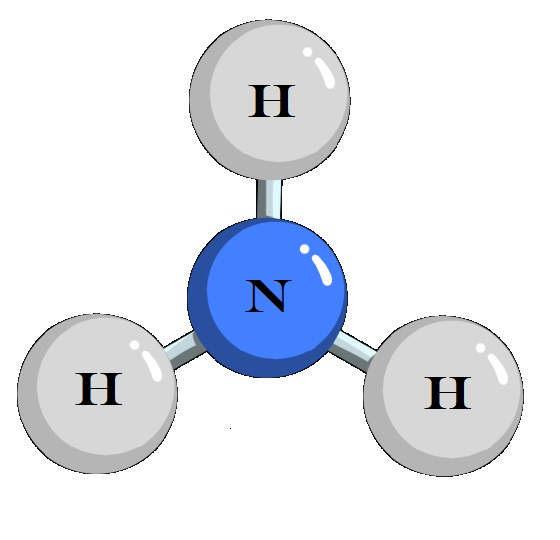
Description
Ammonia (NH3)
Introduction of ammonia
Ammonia (NH3) is a chemical combination consisting of Nitrogen and Hydrogen. It can be synthesised industrially (using a specific catalyst, according to the Haber-Bosch process), or produced naturally from the decomposition of organic matter.
Ammonia is a colourless, highly irritating gas with a pungent odour. Dissolved in water, it makes it possible to obtain Ammonia, the chemical formula of which is NH4OH
Use of ammonia
Ammonia is mainly used to make Nitrogen fertilizers. It is also used as a refrigerant gas, as well as for the manufacture of plastics, explosives and chemicals. Ammonia, on the other hand, makes it possible to produce household products such as degreasers, stain removers, descalers, etc.. It is also used in the textile industry and several other fields of work.
The main areas where ammonia is found
- Refrigeration industry;
- Metallurgical;
- Food industry;
- Agriculture;
- Automotive/ aerospace industry;
- Chemistry and petrochemicals;
- Electronics and semiconductor industry;
- Glass industry
Risks of Ammonia
Ammonia is an extremely corrosive gas that can cause severe burns and eye damage. Highly toxic by inhalation, it is also flammable and explosive within 15-28% volume, as well as in the presence of other substances such as mercury or halogens.
The dangers related to ammonia
Ammonia is particularly irritating to the respiratory tract and to the eye’s mucous membranes. Its flammable and explosive nature also makes it a gas responsible for significant burns to the skin.
Ammonia is a solution that can cause many harmful effects on the body: difficulty breathing, irritation of the nose and eyes, fainting, and skin necrosis, etc.